

Description
parakeet birds for sale
Blue Indian Ringneck Parakeet: Origin and History of the Blue Indian Ringneck
The Blue Ringneck Parakeet has an interesting history that connects traditional Indian Ringneck breeding with the development of modern parrot colour mutations. Its original ancestor, the Rose-ringed Parakeet, naturally occurs across parts of Africa and South Asia, including the Indian subcontinent.
In the wild, these parrots are predominantly green, allowing them to blend into the trees and vegetation of their natural habitats. The blue variety, however, is not a naturally occurring wild population of Indian Ringnecks. It is a colour mutation that became established through selective breeding in captivity.
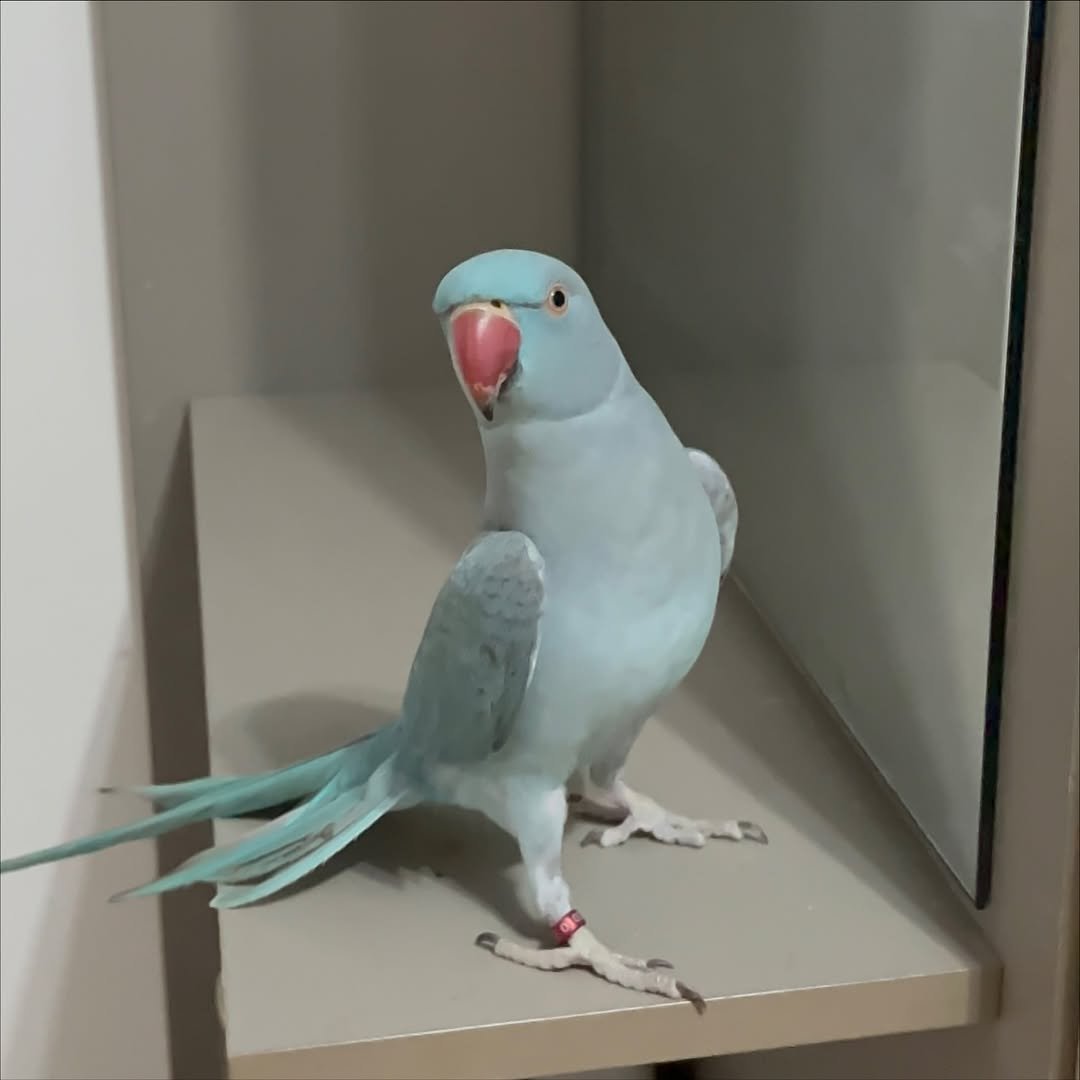
As aviculture developed, breeders began identifying and pairing birds carrying genetic variations that produced unusual feather colours. The blue mutation became particularly desirable because it replaced the traditional green appearance with attractive blue plumage.
Today, Blue Ringnecks are found in many aviaries and private breeding collections around the world. Their popularity has also encouraged breeders to develop additional colour combinations using blue as a genetic foundation.
Physically, they retain the characteristic features of the original species: a long graduated tail, strong curved red beak, powerful feet and an upright posture. Their size and general behaviour are also comparable to those of green Indian Ringnecks.
What makes this variety particularly interesting is that its history demonstrates how selective breeding can produce striking differences in appearance without creating an entirely new species.