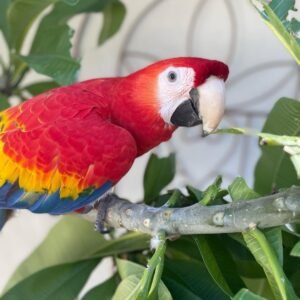





Description
Female Macaw Parrots For Sale
Scarlet Macaw: Habitat, Natural History and Conservation
Scarlet Macaw has a long natural history across the tropical forests of Central and South America. Its distribution stretches across several countries, and its preferred environments include humid evergreen forests, forest edges, and areas with abundant fruiting trees.
These birds are particularly associated with the upper layers of tropical forests. Their strong flight abilities allow them to travel between feeding areas, while their powerful beaks help them access fruits, seeds, and nuts that form an important part of their diet.
Scarlet Macaws also play a role in their ecosystems through their feeding activities. By consuming fruits and moving between different forest areas, they can contribute to the natural movement of seeds.
Despite being classified as Least Concern globally, Scarlet Macaws still face regional pressures. Deforestation, habitat fragmentation, and illegal trapping can reduce local populations. A species can have a relatively favorable global conservation classification while particular populations remain vulnerable.
This is why responsible captive breeding and legal sourcing matter. Buyers should always ask for identification records and evidence of lawful origin instead of supporting the trade in illegally captured wild birds.