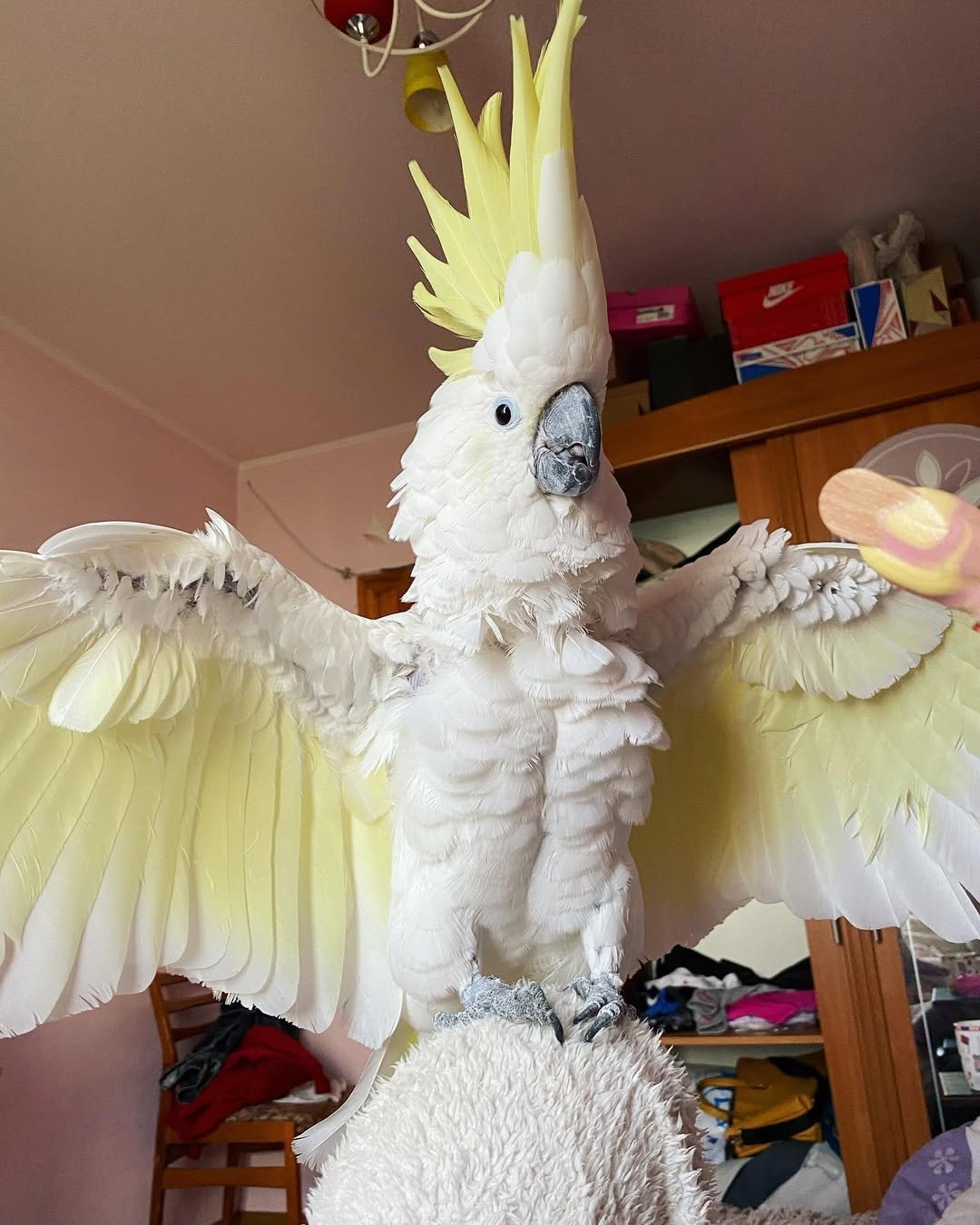


Description
Cockatoo Birds for Sale
Sulphur Crested Cockatoo: Breeding Habits and Reproduction of the Sulphur-Crested Cockatoo
Breeding Sulphur-crested Cockatoos requires an understanding of their natural nesting behavior, social relationships and environmental needs. In Australia, these parrots commonly nest in large hollows found in mature trees, particularly eucalyptus trees. Suitable nesting cavities are important because the birds depend on existing hollows rather than constructing completely new nests.
Pairs generally develop strong relationships and may remain together for many breeding seasons. Both parents participate in raising their young, sharing responsibilities associated with incubation and feeding the chicks.
The female typically lays two to three eggs, although clutch sizes can vary. Incubation lasts approximately four weeks, and young birds remain dependent on their parents for an extended period after hatching.
For avicultural breeders, providing suitable nesting conditions is only one part of responsible breeding. Birds should be mature, healthy and compatible before breeding is encouraged. They also require adequate space, a nutritionally balanced diet and access to an experienced avian veterinarian.
Another important consideration is that cockatoos are long-lived birds. Breeding should never be approached simply as a way of producing attractive young parrots for sale. Each chick represents a long-term welfare responsibility.
Understanding the reproductive biology of this species helps breeders appreciate why mature trees and natural nesting hollows are so valuable in the wild. Protecting these habitats is essential for maintaining healthy populations.